Keith Haring in London
Keith Haring in London
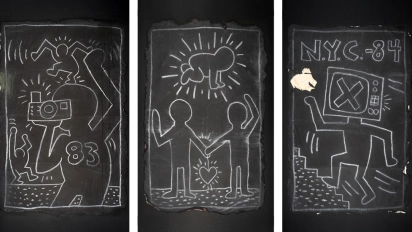
<p><strong>From Subway Walls to the London Art Scene</strong></p><p>Keith Haring (1958–1990) was an American modern artist known for his bold, graphic style, recurring symbols, and commitment to making art accessible in public spaces. Keith Haring in London can be experienced at Moco Museum London as part of its modern and contemporary collection.</p><p>Keith Haring was a visionary artist whose bold, graphic style and socially charged themes made him one of the most influential artists in modern and contemporary art. Born in Kutztown, Pennsylvania, Haring's upbringing was influenced by his father's cartoon drawings and American pop culture icons like Walt Disney and Charles M. Schulz, the creator of Peanuts characters like Snoopy and Charlie Brown. In 1978, Haring moved to New York City to attend the School of Visual Arts, where he immersed himself in the city's thriving art and queer scenes.</p>
Early Experimentation and the Power of Repetition
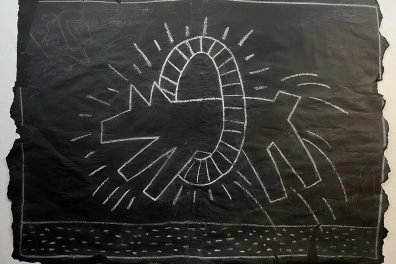
Keith Haring's artistic style was informed by his understanding of semiotics, the study of symbols and how meaning is constructed through visual signs, which he explored while studying at the School of Visual Arts. His piece Untitled (1978), displayed at Moco Museum London, reflects this early exploration of patterns and symbols.
Keith Haring Symbols and Their Meaning
Keith Haring symbols form a visual vocabulary rather than isolated images. Recurring symbols include: The radiant baby, The barking dog, Dancing figures, Angels and simplified human forms.
Gli artisti in mostra includono



Recensioni
Informazioni pratiche
Orari di apertura
Monday – Thursday: 10:00 – 17:00
Friday – Saturday: 10:00 – 18:00
Sunday: 10:00 – 17:00
Durata
Approximately 90-120 minutes
Contatti
Do you have a question? Email us at london@moco-museum.com.
For all other inquiries visit our contact page.
Audioguida
Don't forget to bring your headphones to access the free audio tour.
Recensioni dei media

Time Out London
Moco Museum London is bringing a fresh dose of contemporary and street art to the capital. Expect works by Banksy, KAWS, Basquiat and more in this vibrant new space at Marble Arch.

Evening Standard
One of the most exciting museum openings in London. Moco brings a bold, accessible approach to contemporary art that's long been missing from the West End.

The Guardian
Targeting 18- to 35-year-olds, Moco Museum is redefining how new audiences engage with modern, contemporary, and street art.

Condé Nast Traveler
Moco Museum London is a must-visit for anyone looking to experience contemporary art in a dynamic and immersive setting near Marble Arch.

Tripadvisor
A fantastic addition to London's museum scene. Colourful, immersive and packed with iconic works by some of the biggest names in contemporary art.
“The most important thing in life is to remember the importance of life.”