Keith Haring Paints a Large Mural at East Houston Street
In the summer of 1982, Keith Haring painted his first large-scale public mural on the wall of a building at East Houston Street in Manhattan. The work was spontaneous, bold, and unmissable. It established Haring as a street-level public artist who was determined to bring art out of galleries and into the fabric of the city itself.
Almost as if he knew his time on this planet would be limited, Haring worked with relentless energy. The mural at East Houston Street was just the beginning of a practice that would cover walls, subway stations, and public spaces around the world.
East Village
Born in 1958 in Reading, Pennsylvania, Haring moved to New York City at the age of twenty and enrolled at the School of Visual Arts in 1978. The city was in the grip of a post-punk cultural explosion. Downtown Manhattan was a place of reinvention, where artists arrived by Greyhound bus and built new identities from scratch.
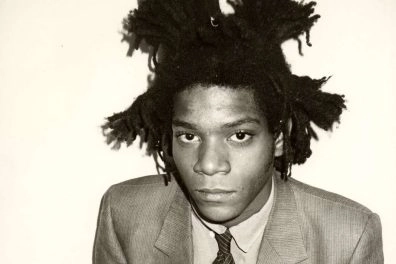
Haring quickly found community. His friendships with Jean-Michel Basquiat, Kenny Scharf, and Futura 2000 placed him at the centre of a creative scene that was raw, collaborative, and deeply connected to street culture. There was no social media. Word spread through presence, through being there. Stephen Sprouse was putting graffiti on haute couture. The boundaries between art, fashion, and the street were dissolving.
The Mudd Club and Club 57
While Studio 54 represented uptown glamour, the real energy was downtown. The Mudd Club and Club 57 were underground venues where artists, musicians, and performers gathered to experiment. The fourth floor of The Mudd Club housed a gallery. Club 57 hosted the First Annual Group Erotic and Pornographic Art Exhibition.
These spaces were not about polish or prestige. They were about freedom, risk, and community. The Anvil, the gay bathhouses, the loft parties — all were part of a downtown scene that refused to separate art from life, or desire from expression.
Madonna and Grace Jones
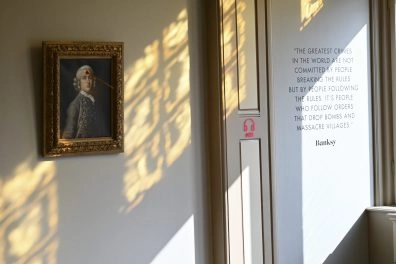
Haring actively sought fame and visibility — a contrast to Banksy, his closest modern equivalent, who operates behind anonymity. Haring believed that visibility was a form of activism. His collaborations with Madonna and his body-painting work with Grace Jones for her music videos brought his visual language to massive audiences.
But the AIDS crisis was devastating New York. Haring was diagnosed HIV-positive in 1987, at the age of twenty-nine. His phallic drawings, once playful and exuberant, were repurposed for AIDS awareness campaigns. Art became a tool for survival, for communication, for the refusal to be silent.
Keith Haring died on February 16, 1990, at the age of thirty-one. His legacy endures not just in his art, but in the principle that art belongs to everyone.
Art for the People
Haring maintained a rebel stance against the elitist fine-art world. Simon Doonan has described him as more ethical than Warhol, driven by a genuine belief that art should serve the public good. His Crack Is Wack mural was inspired by his studio assistant’s addiction to crack cocaine. His Free South Africa posters were distributed for free in Central Park. His Safe Sex posters are still used in public health campaigns today.
“Warhol gave grandiosity to everyday things; Haring made overwhelming things bearable with humor.” — Yoko Ono
Haring’s work remains a powerful reminder that art can be urgent, generous, and universal. His bold lines and radiant figures continue to speak across generations, as relevant now as they were on the subway platforms of 1980s New York.